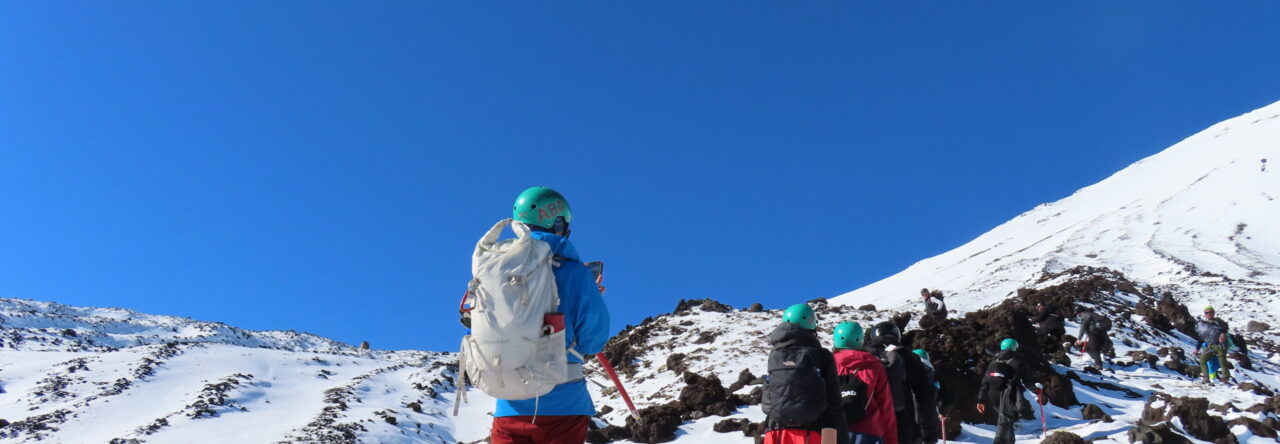
I had a wonderful seven-day trip to Tongariro National Park, New Zealand’s North Island. My first three days were spent at Tongariro National Park, and then I spent time in Rotorua and Auckland.
Day 1 – August 4
On my first day, I arrived at Auckland International Airport almost on time. After going through the security gates, I picked up my rental car and drove to Tongariro National Park. I left the airport around 10 a.m.
I headed to Tongariro National Park, passing through beautiful green land and valleys for about five hours. On the way, I stopped at a cafe to have lunch in a small village and then arrived at a hotel in the park around 2 pm.
Skotel Alpine Resort is located right next to the park’s visitor center. It has some great facilities, including a kitchen lounge, a sauna, and a spa. Most of the guests were there to enjoy the nearby ski slopes in winter.
Day 2 – August 5
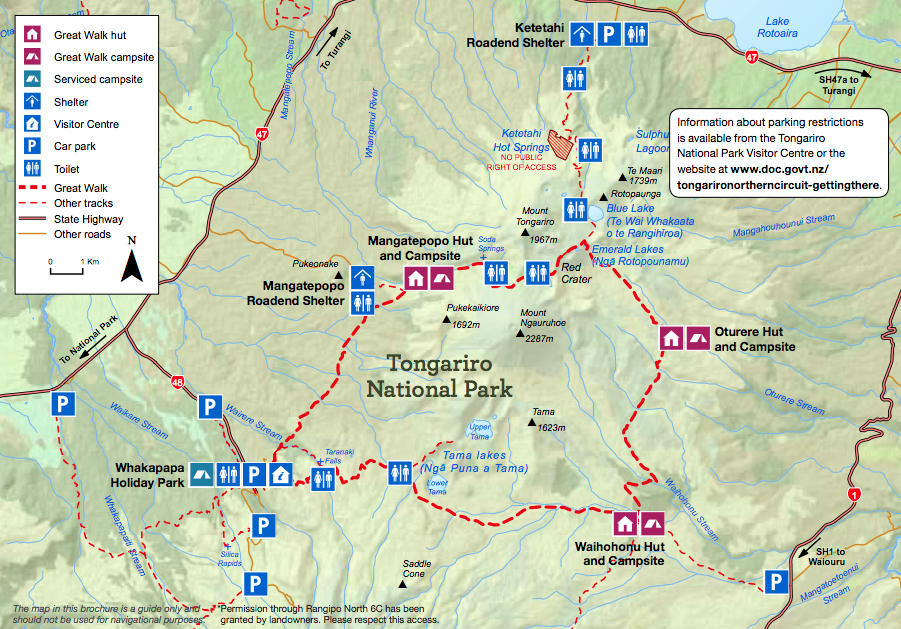
The weather was nice. I stopped by the visitor center to check the hiking trail for the day. This hike would be a good warm-up and a chance to see how I was feeling before the next day’s adventure.
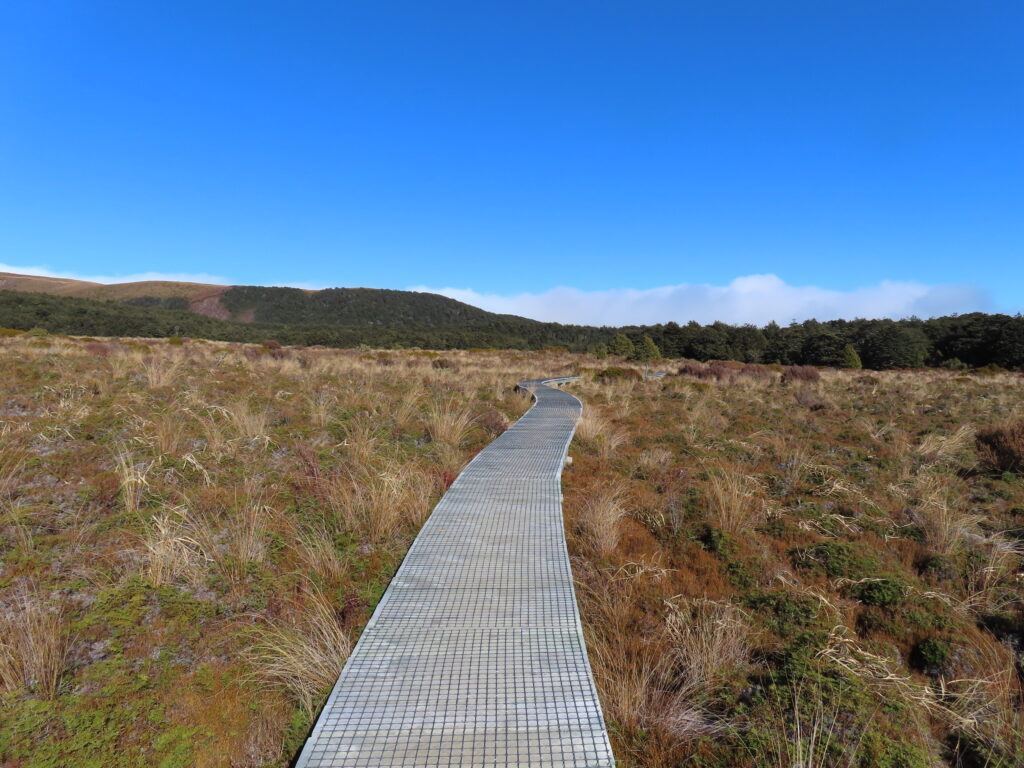
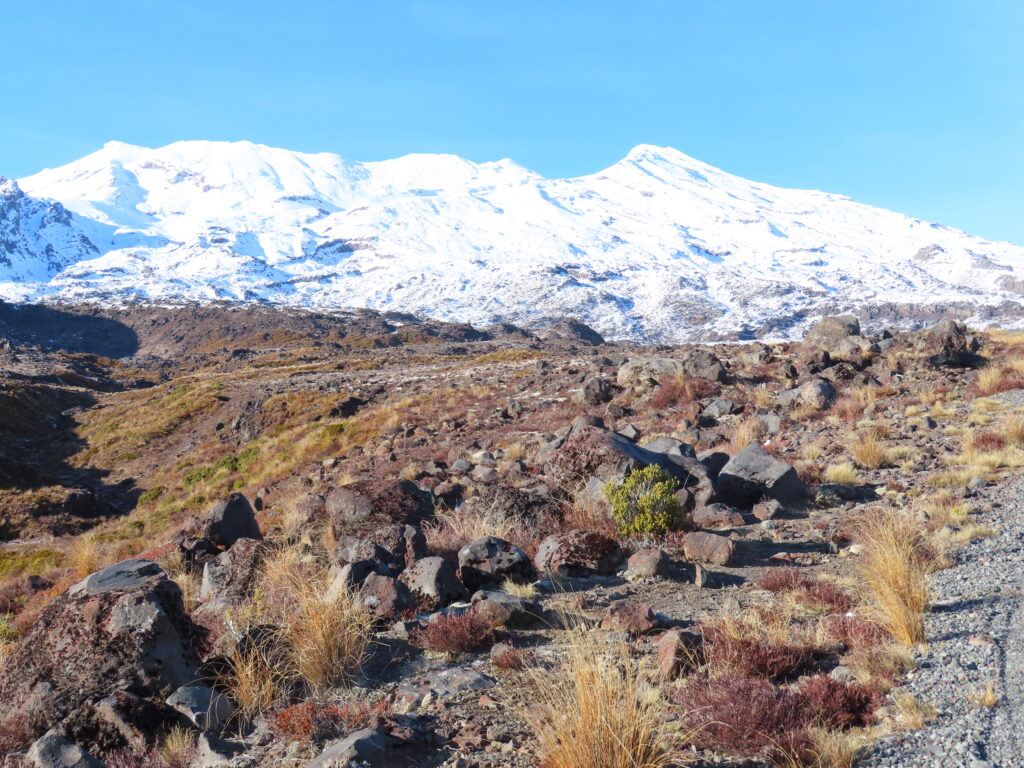
I took the trail toward Waihohonu Hut. According to the information board, it takes about two hours to reach the hut. I arrived at the trailhead at 9:00 a.m. and set off toward the hut. After about four hours of hiking, I returned to the trailhead around 2:00 p.m. I felt fine and had no physical problems. I was ready to go.
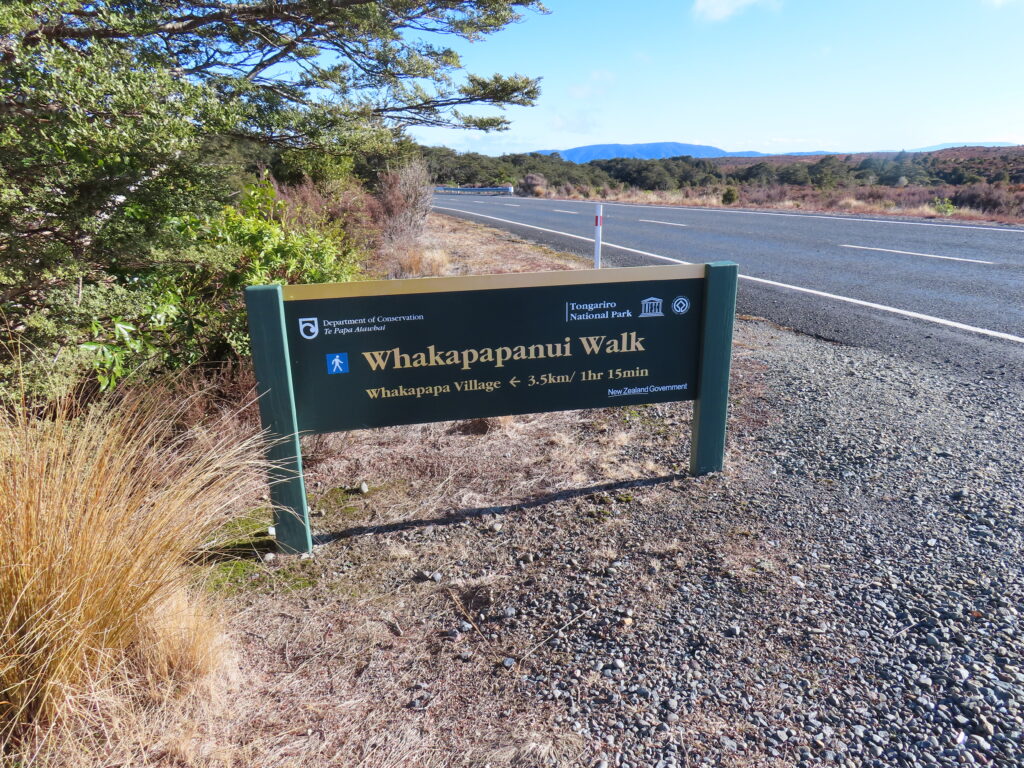
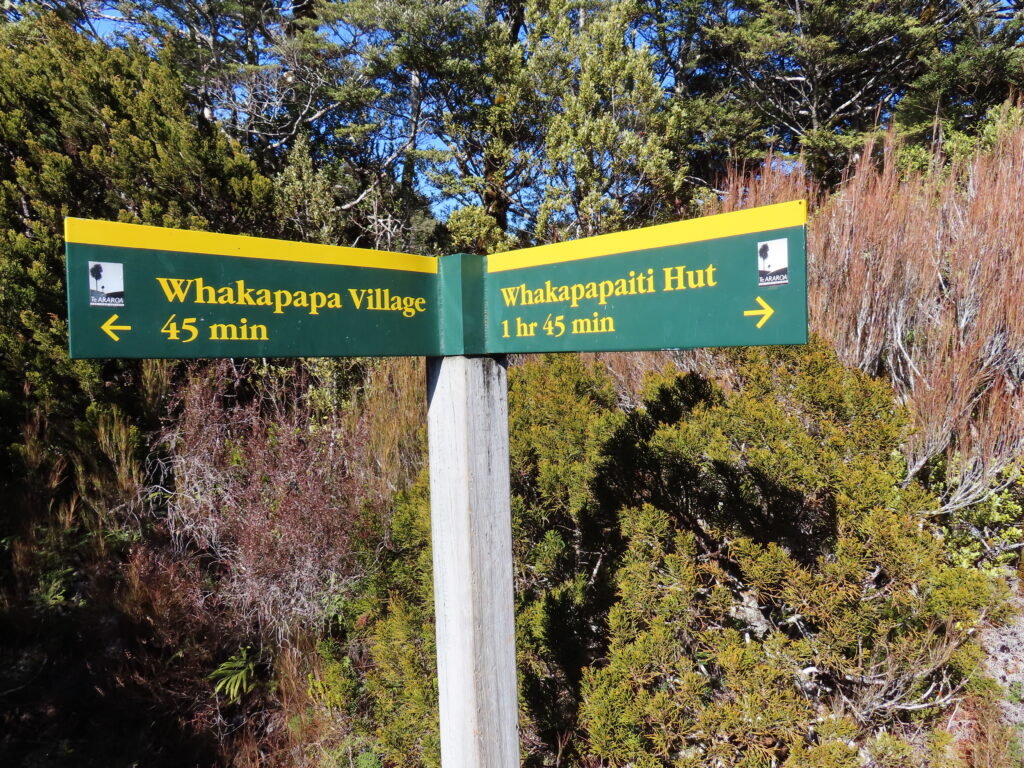
After a four-hour hike, I stopped at a small grocery store inside a gas station in a village near the park and grabbed some food for dinner.
While I was preparing some lamb to cook later in the kitchen lounge, a guy said to me, “That’s some nice lamb. Are you going to cook it in a pan?”
I said, “Yes, I am.”
Then he suggested, “You should try cooking it outside on a BBQ grill.”
I hadn’t noticed that there was a BBQ grill set up outside.
He went outside to show me the grill, and I followed him. He cut off a bite-sized piece of his lamb for me to try. I took a bite and said, “Wow! It tastes better, and the texture is much nicer than when it’s cooked in a pan.”
So, I decided to cook my lamb on the BBQ grill instead of in a pan. We ended up having dinner together at the same table that evening.
New Zealand Beer
New Zealand has an amazing variety of beers, with all kinds of unique tastes and flavors. My favorite is hazy IPA, which has a distinctive fruity flavor that I really enjoy.
While having dinner, I received an email from the mountain guide agency I had signed up with. Climbing Mt. Ruapehu the next day was the main purpose of this trip.
The email said:
“Unfortunately, we have had to cancel tomorrow’s Ruapehu tour due to snow conditions and avalanche risk.”
It also said:
“You are welcome to join tomorrow’s Tongariro Alpine Crossing, or postpone to another day if you wish.”
Unfortunately, I didn’t have enough time to reschedule the Mt. Ruapehu climb, so I decided to join the alternative activity the following day.
Day 3 – August 6
5:00 a.m. — Luckily, the weather was stable and looked even better that morning. I packed and checked all the gear I would need for the day’s Alpine Crossing hike, which would take about seven hours.
After having a substantial breakfast, I headed to the office and arrived at 6:45 a.m. The other people who had signed up for the tour arrived one after another. The guides checked everyone’s clothing and gear, including their boots and winter equipment. Once everyone was ready, we all got on the tour bus.
Our party probably had about 15 members, including two guides, One indian, two Japanese, and others Italians.
8:30 a.m.— We arrived at the trailhead. There were already several other groups there. 8:45 a.m.- Everyone was ready to start the hike.
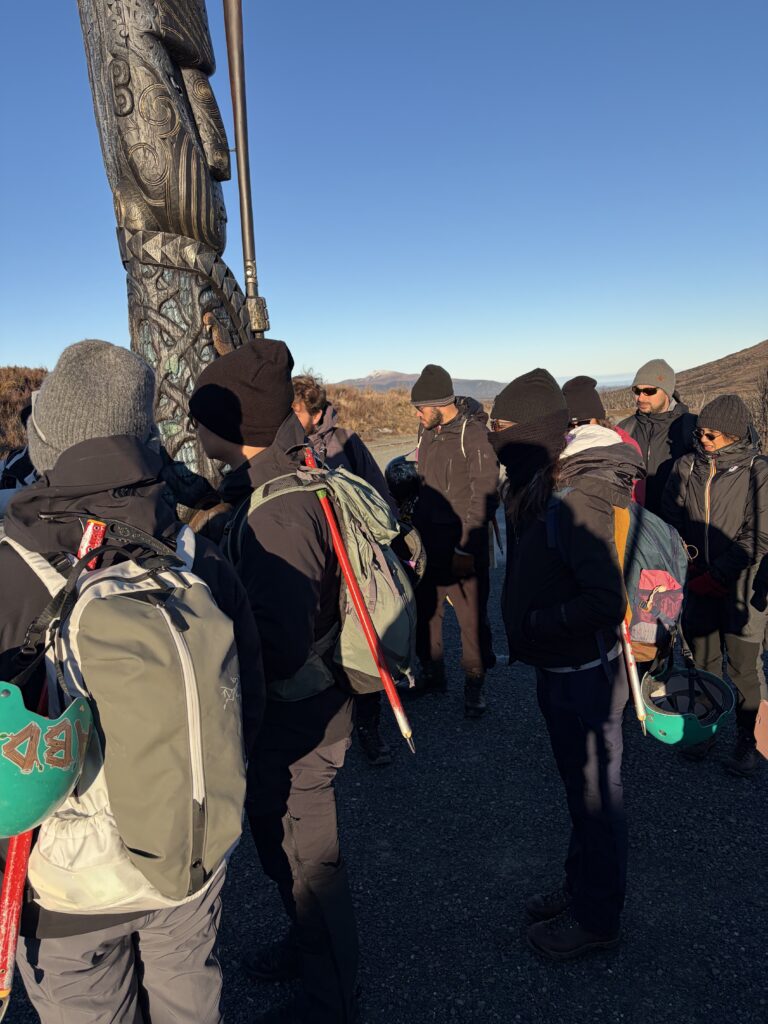
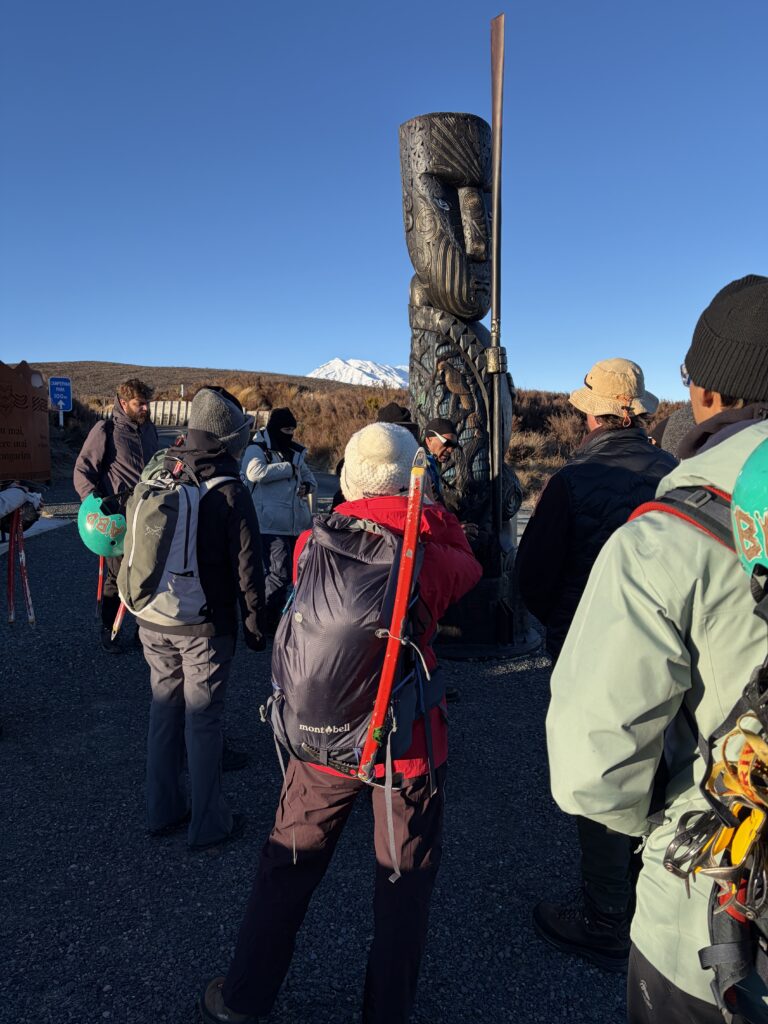
For the first hour, we walked uphill along a well-maintained trail. Some sections of the trail crossed long wooden boardwalks that protect the plants in the wetlands during the summer. In winter, however, the ground underneath was covered with ice and snow.
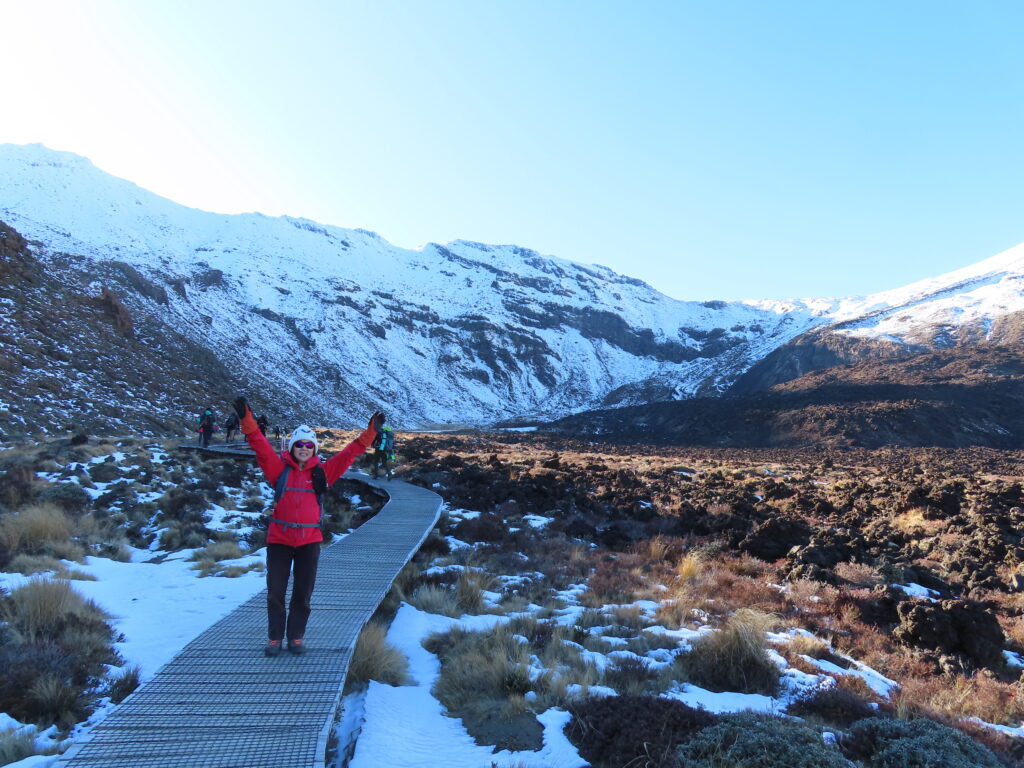
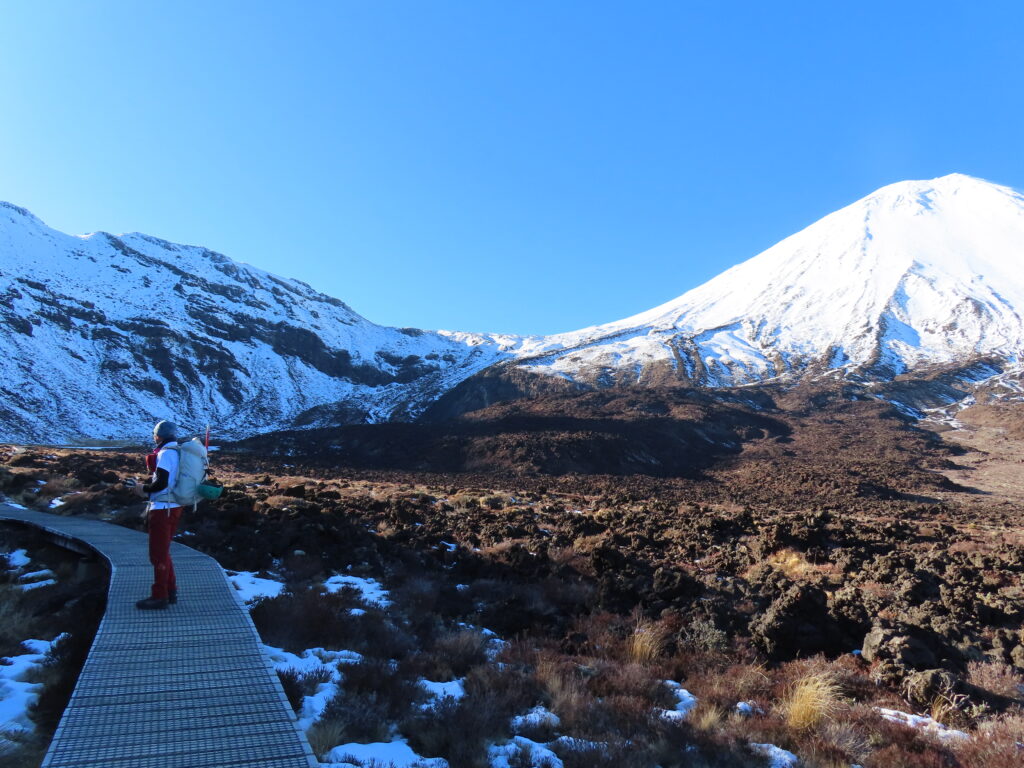
10:00 a.m. — Bathroom break. Everyone took off one layer to avoid overheating as the temperature began to rise. After this point, there were no more toilet facilities, so we continued uphill for another hour.
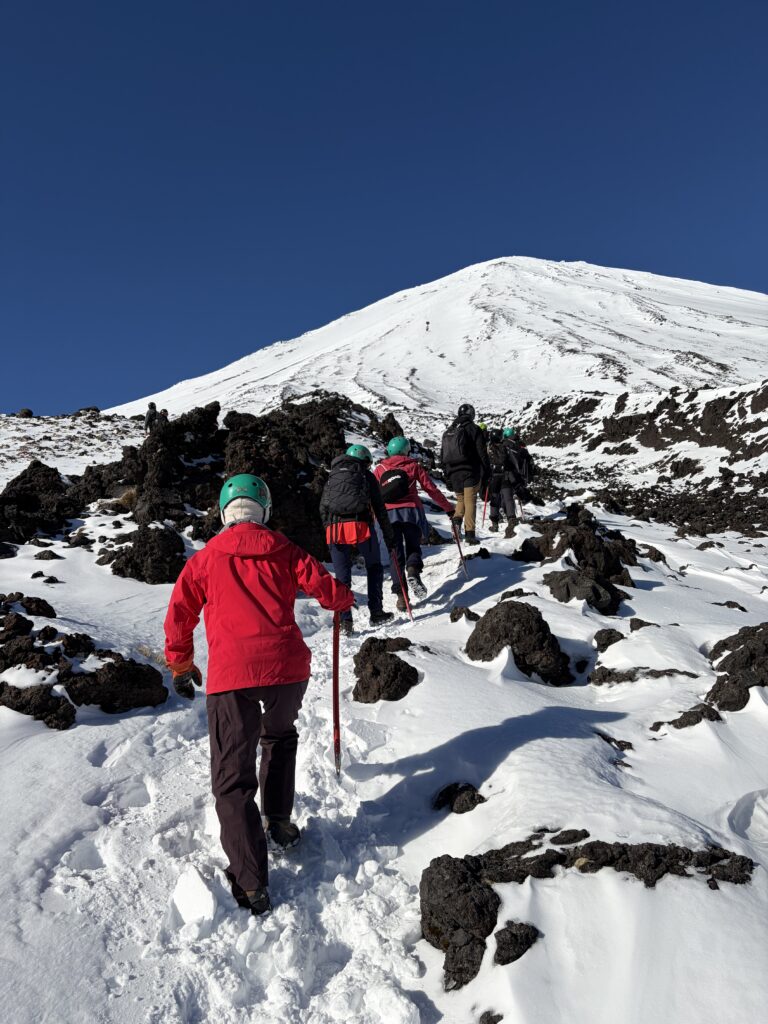
11:00 a.m. — As we gained elevation, the snowy terrain became steeper and more rugged, with jagged lava rocks underfoot. The footing became increasingly unstable, but we kept climbing for another hour.
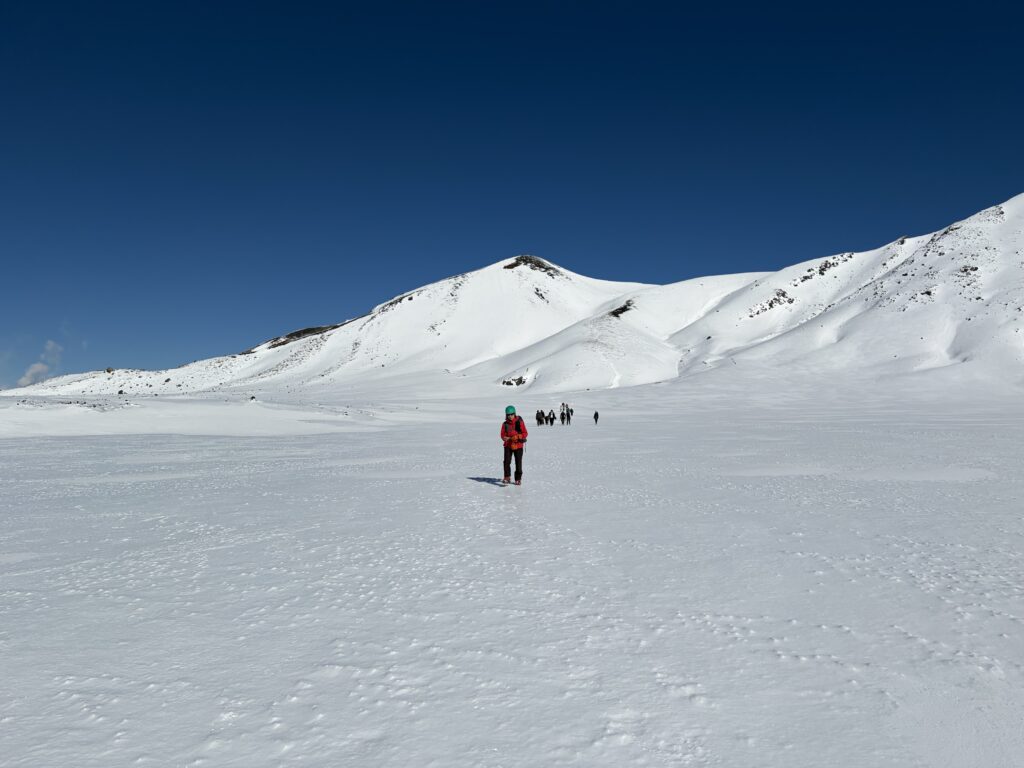
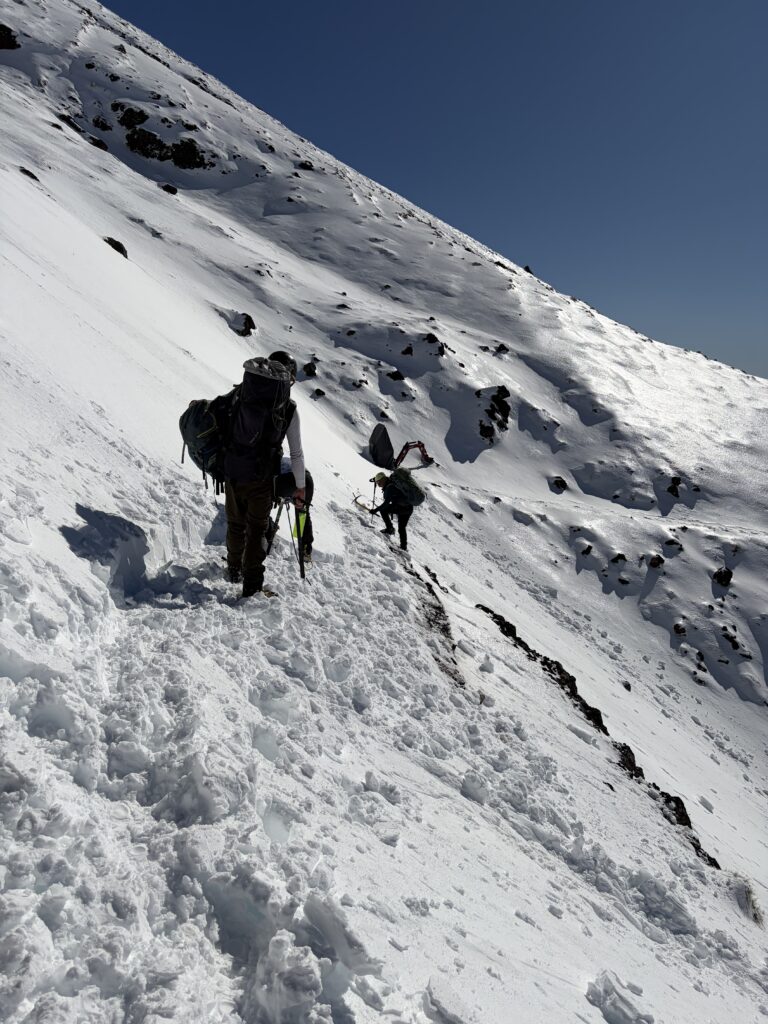
12:00 p.m. — As the snow became deeper and icier, everyone put microspikes on their boots. We continued up the steep, snowy trail for another hour. As the snow became even deeper and icier, we switched from microspikes to crampons.
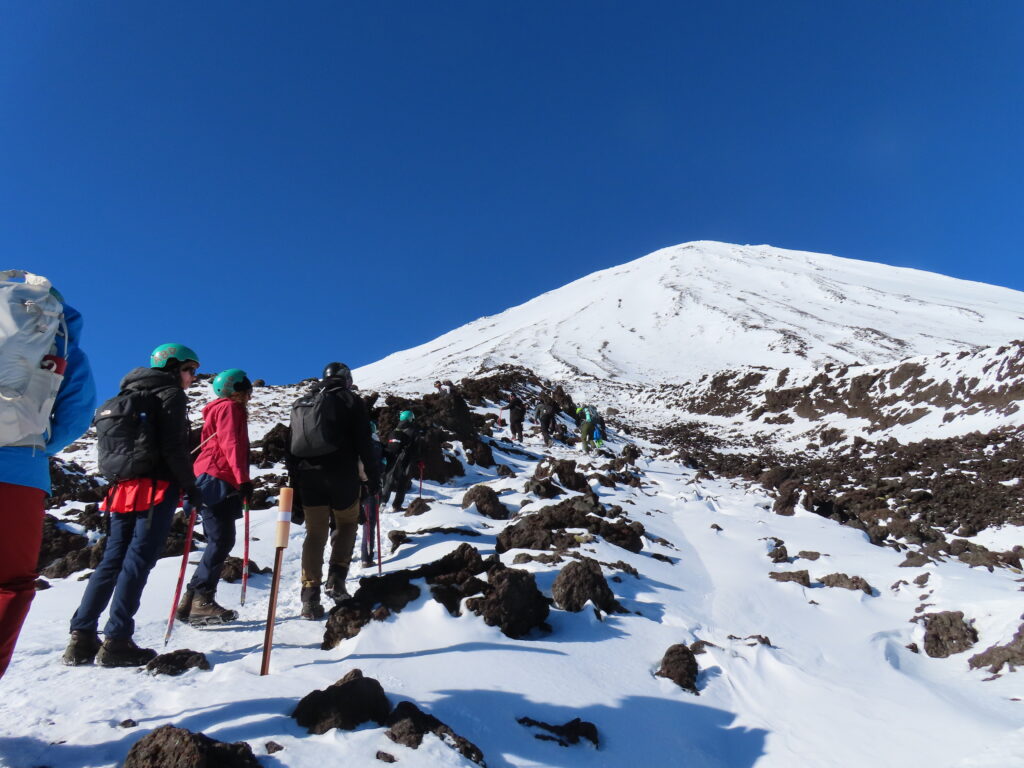
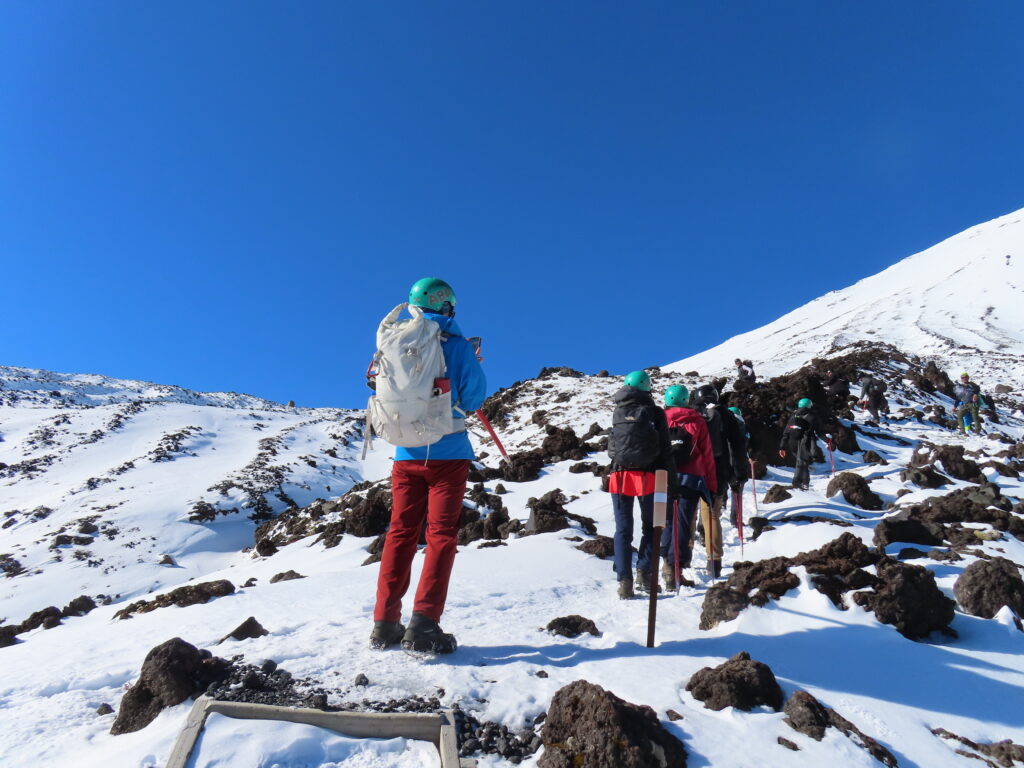
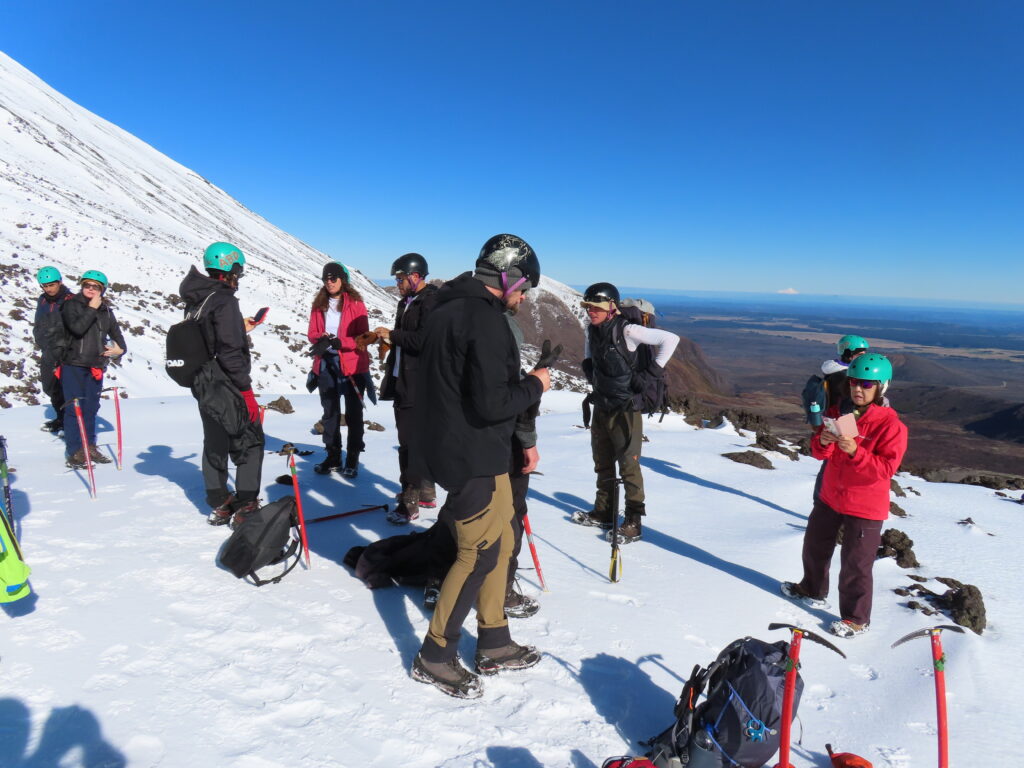
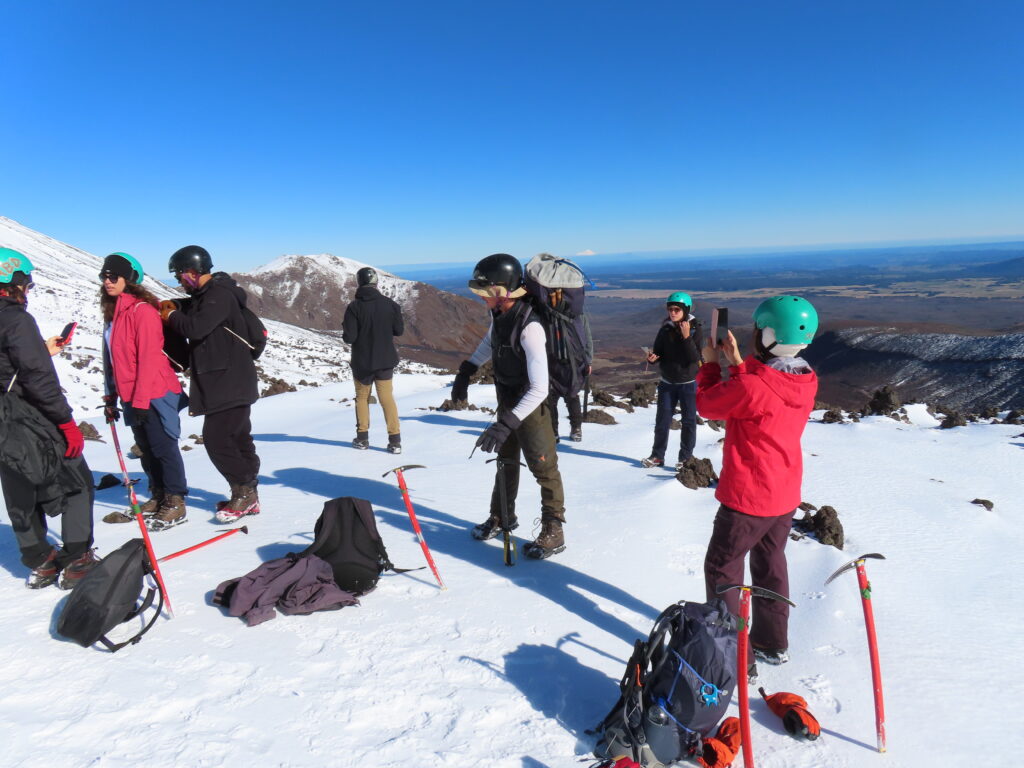
1:00 p.m. — We continued up the snowy wall, moving step by step and carefully finding secure footing in the deep snow. However, the crampons did not work well in the fresh snow, which made the climb quite challenging.
We finally reached the highest point of the Alpine Crossing. The view from the top was absolutely breathtaking. I could see two beautiful lakes in the distance and a huge, snow-covered crater just below us. The crater is green in summer, but it was completely covered in snow that day. p.m
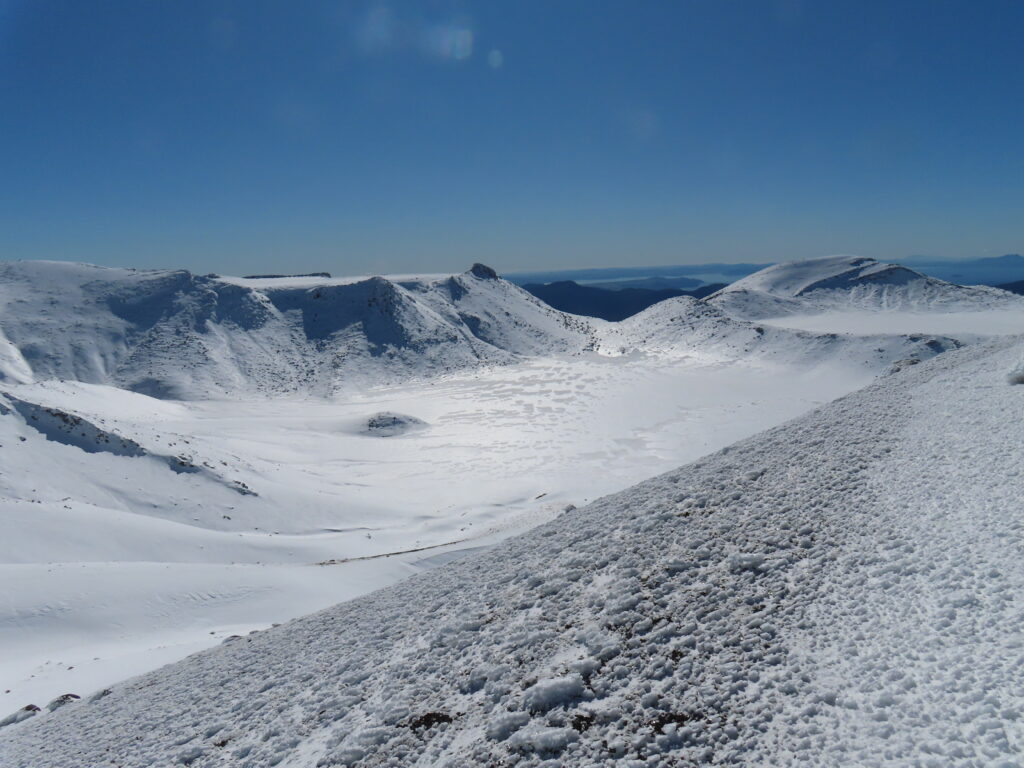
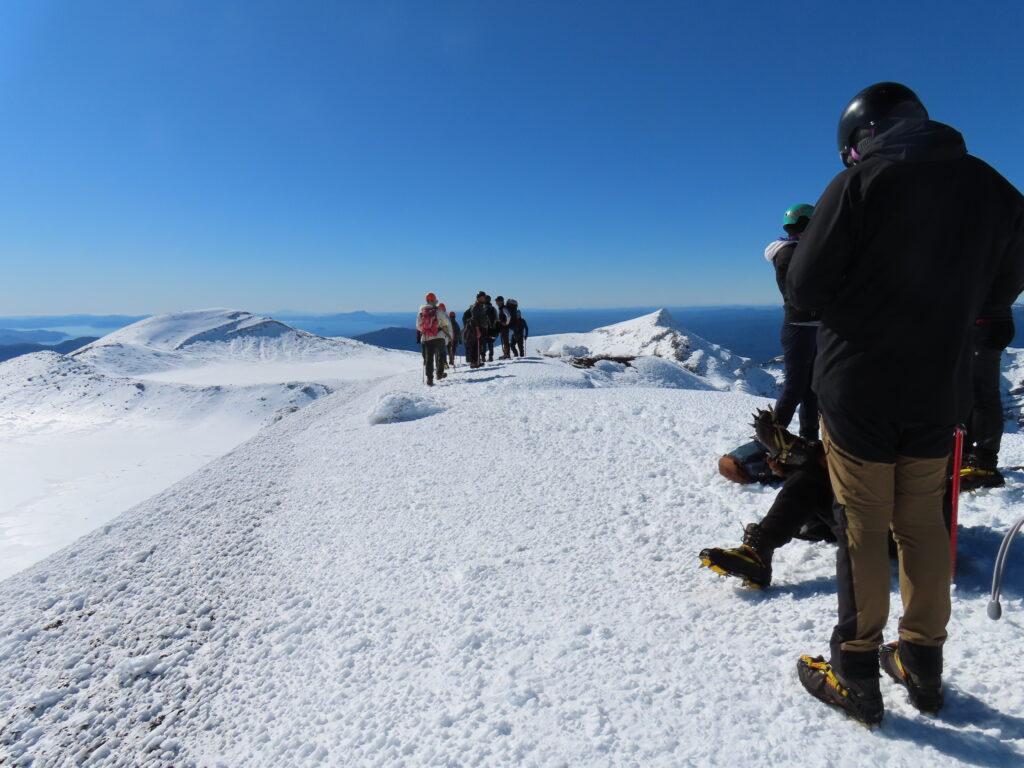
1:30 p.m. — We descended into the crater and took a 30-minute lunch break. After lunch, we crossed the crater and began the long descent. The next four hours were tougher than the ascent, both physically and mentally. My legs were already tired from the climb, and the steep, uneven, snow-covered trail made every step demanding. I had to stay focused and carefully watch my footing all the way down. It felt like the descent would never end.
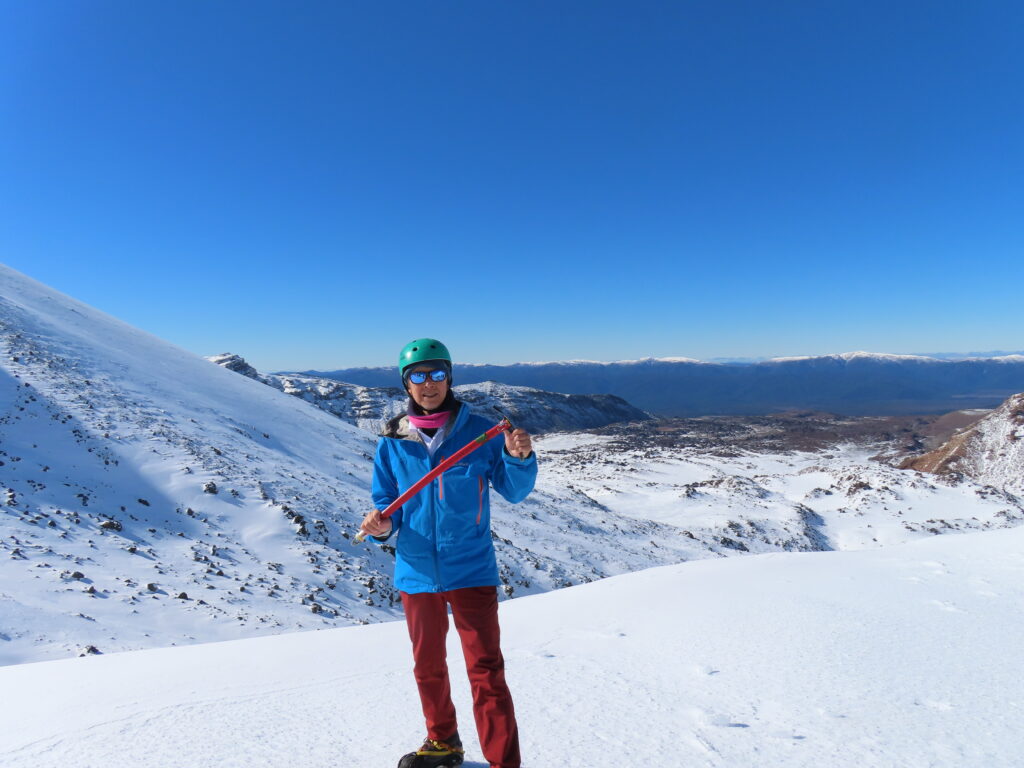
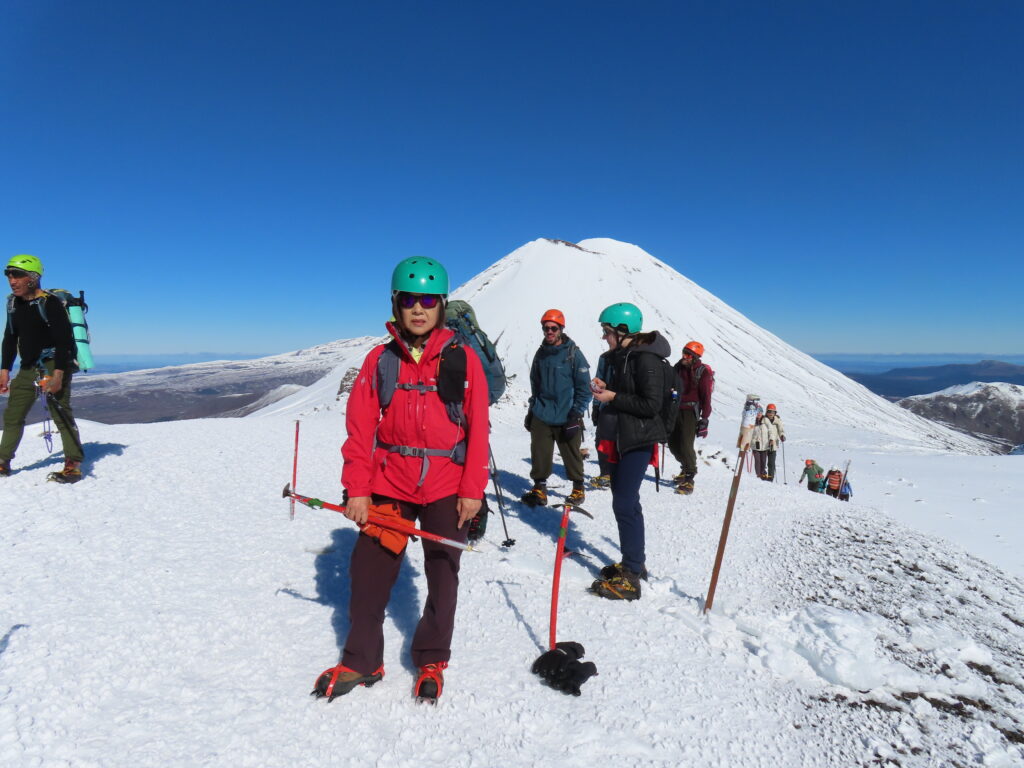
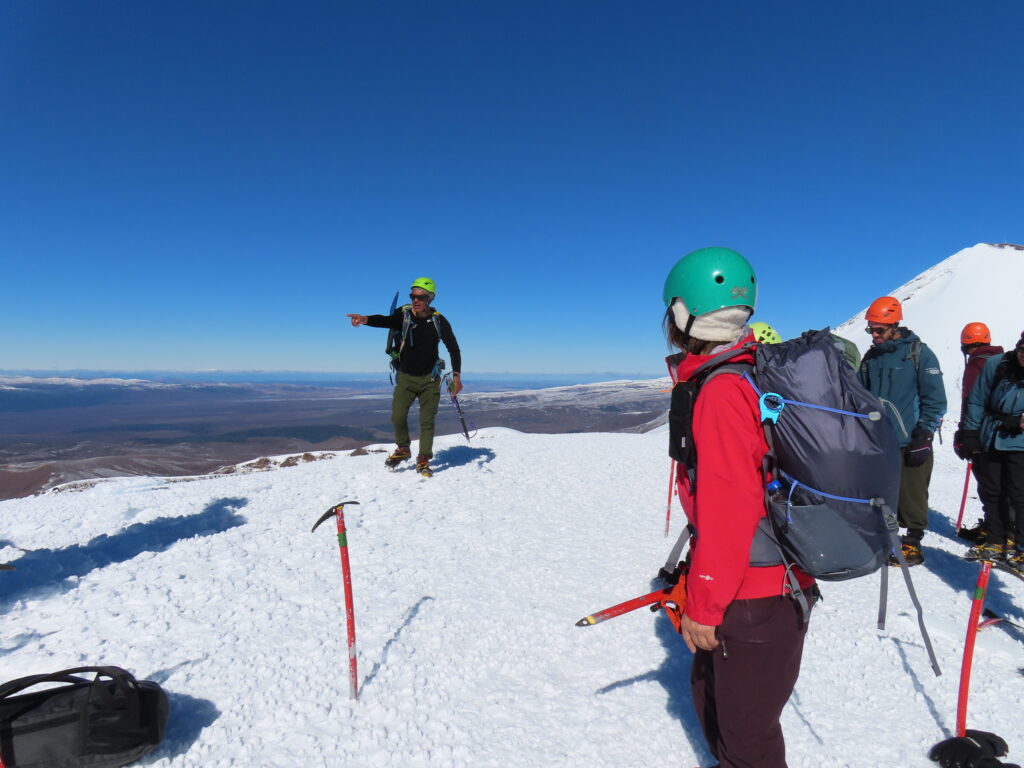
We continued along the Alpine Crossing all the way to the endpoint, where the tour bus was waiting to pick us up.
5:00 p.m. — We made it!
Day 4 — August 7, Rotorua
I headed to Rotorua, about a three-hour drive from Tongariro National Park.
Rotorua is a world-famous destination known for its spectacular geothermal landscapes. As I got closer and closer to Rotorua, I could see steam rising from numerous vents. It almost looked like smoke coming from an industrial area.
I visited one of the geothermal attractions, Wai-O-Tapu Thermal Wonderland, in Rotorua.
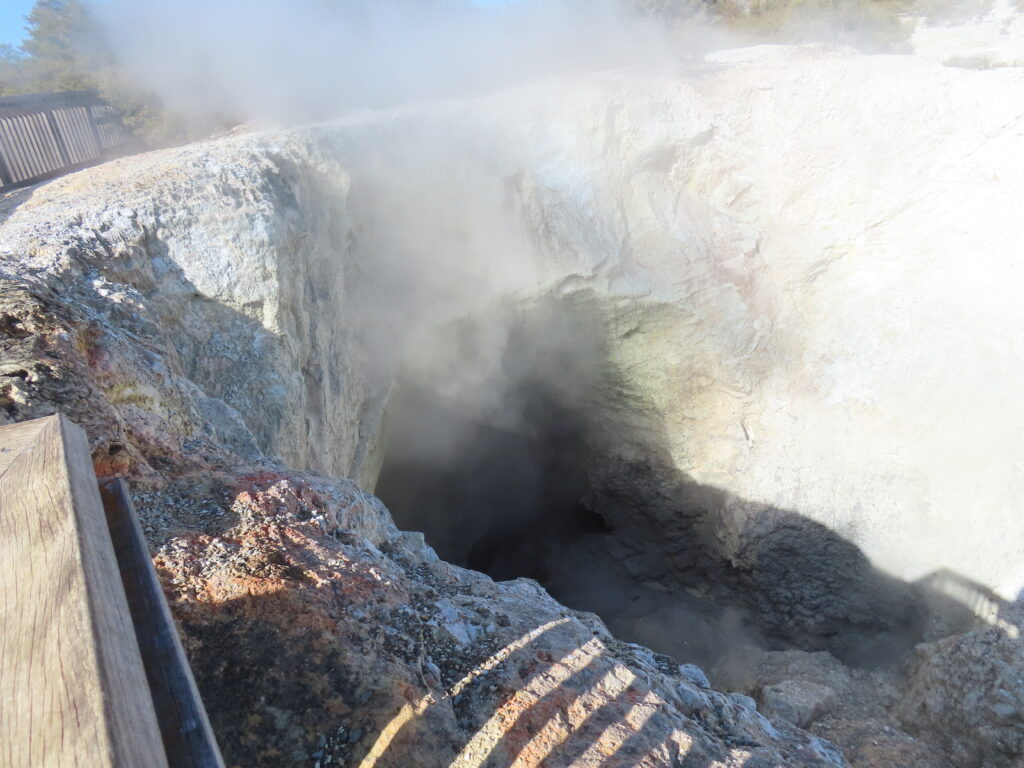
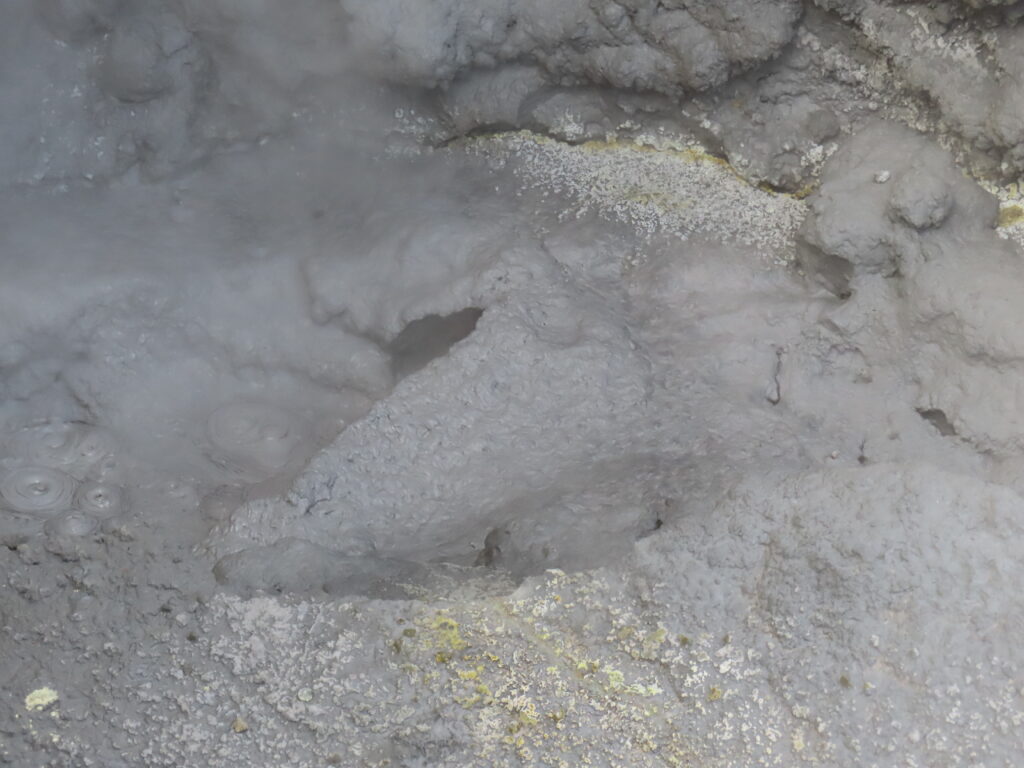
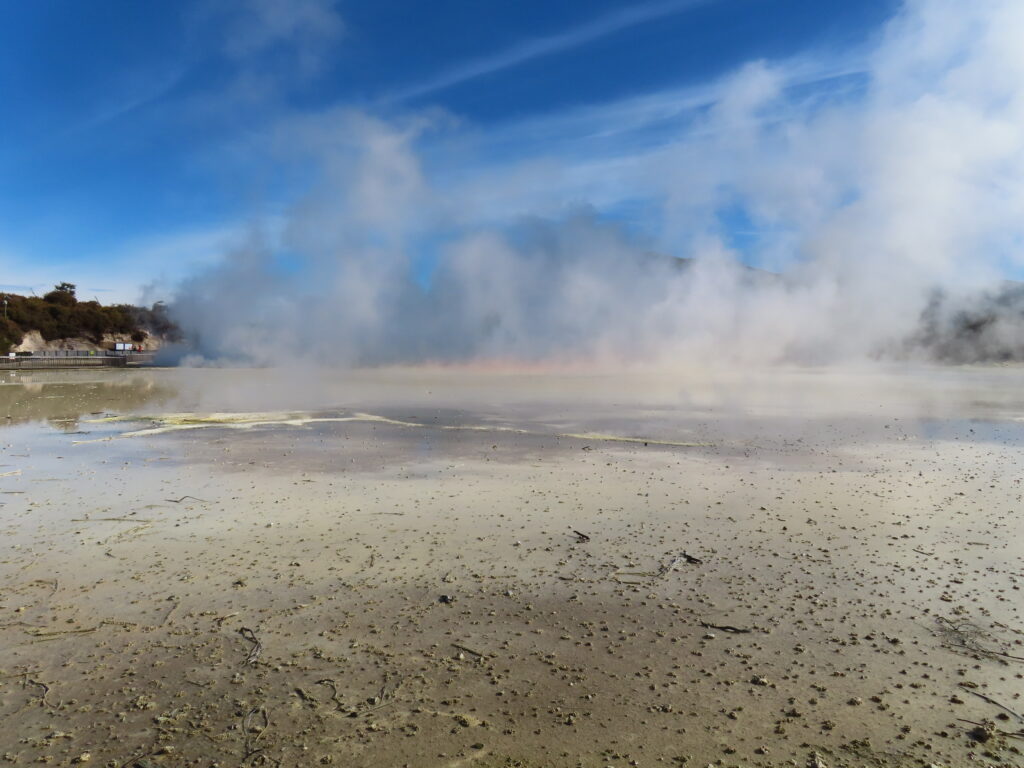
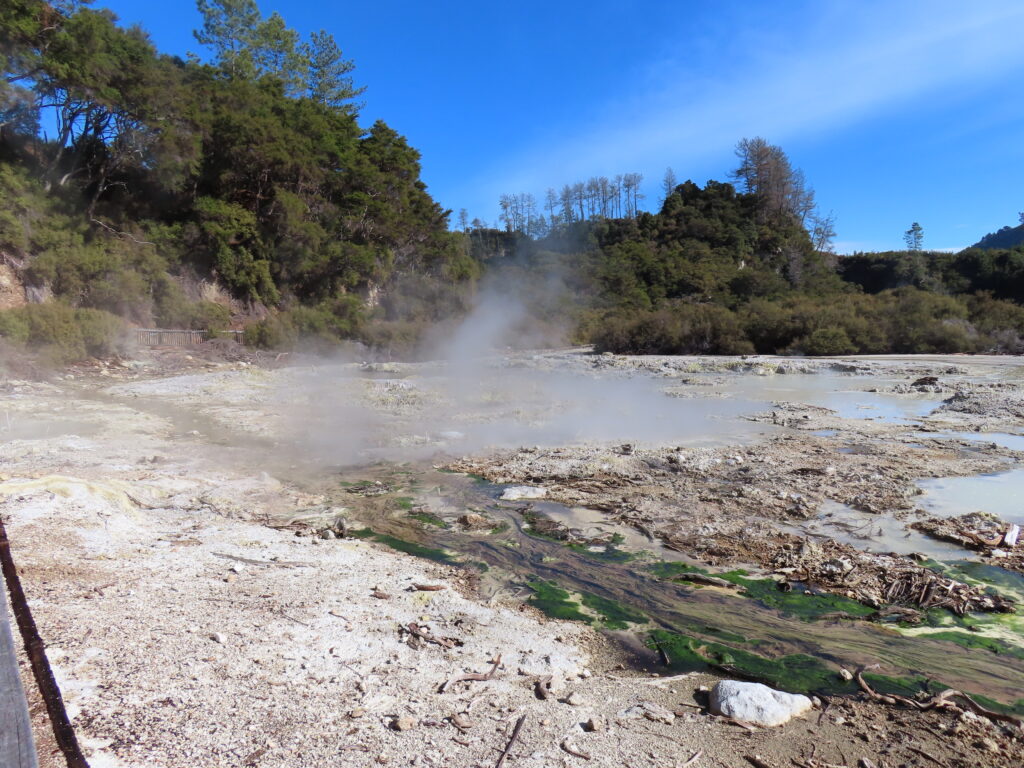
This geothermal landscape has been formed by volcanic activity over thousands of years. It showcases one of New Zealand’s most colorful and diverse geothermal systems, creating a truly unique landscape.
There are geothermal pools everywhere, with steam rising here and there, as if the ground were boiling. One of the pools had something floating on the surface that looked like crude oil. It was my first time seeing anything like that. There was an information board for visitors explaining what it was, so I stopped to read it.
There was also a green pool. According to the information board, its green color came from green algae.
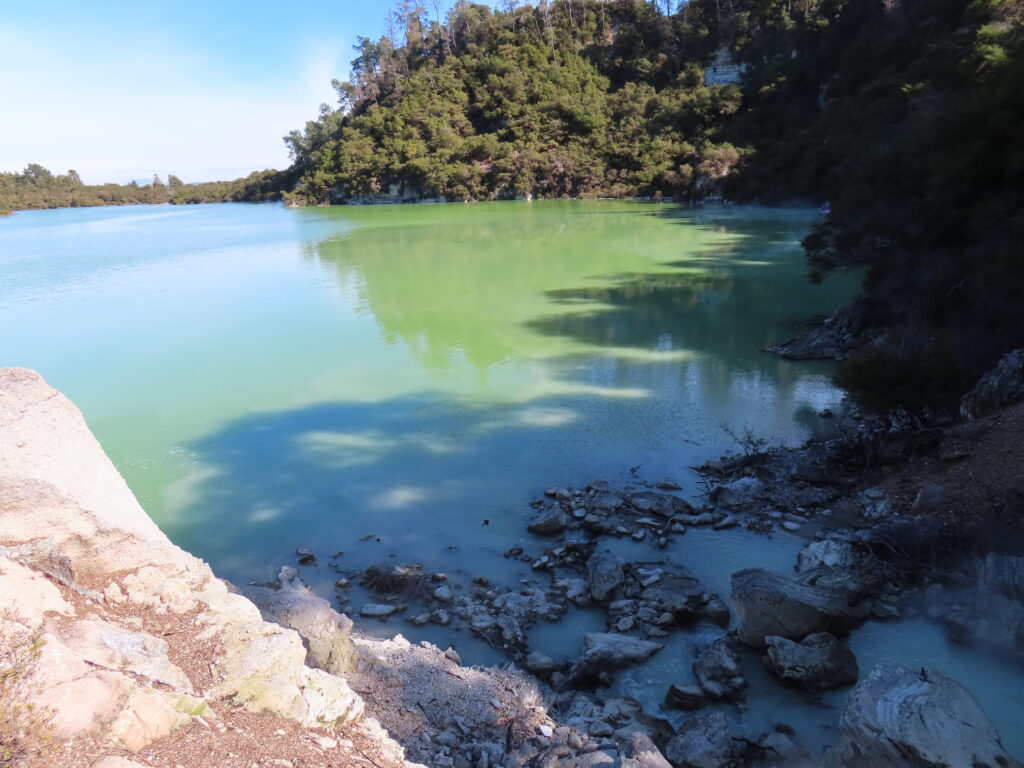
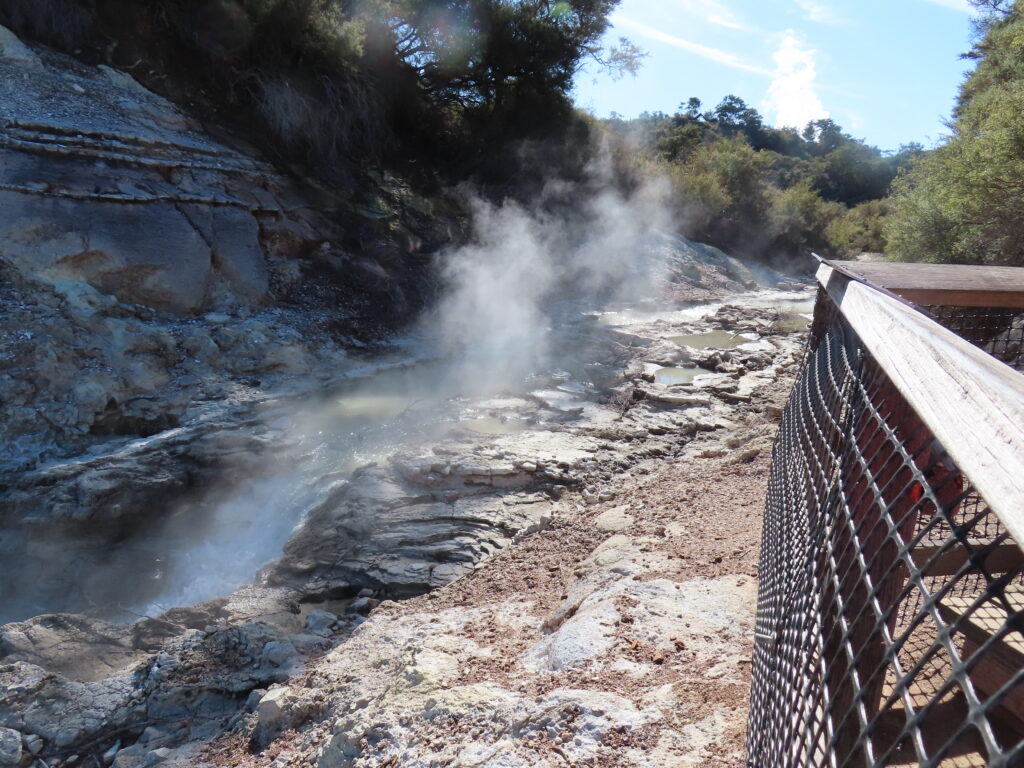
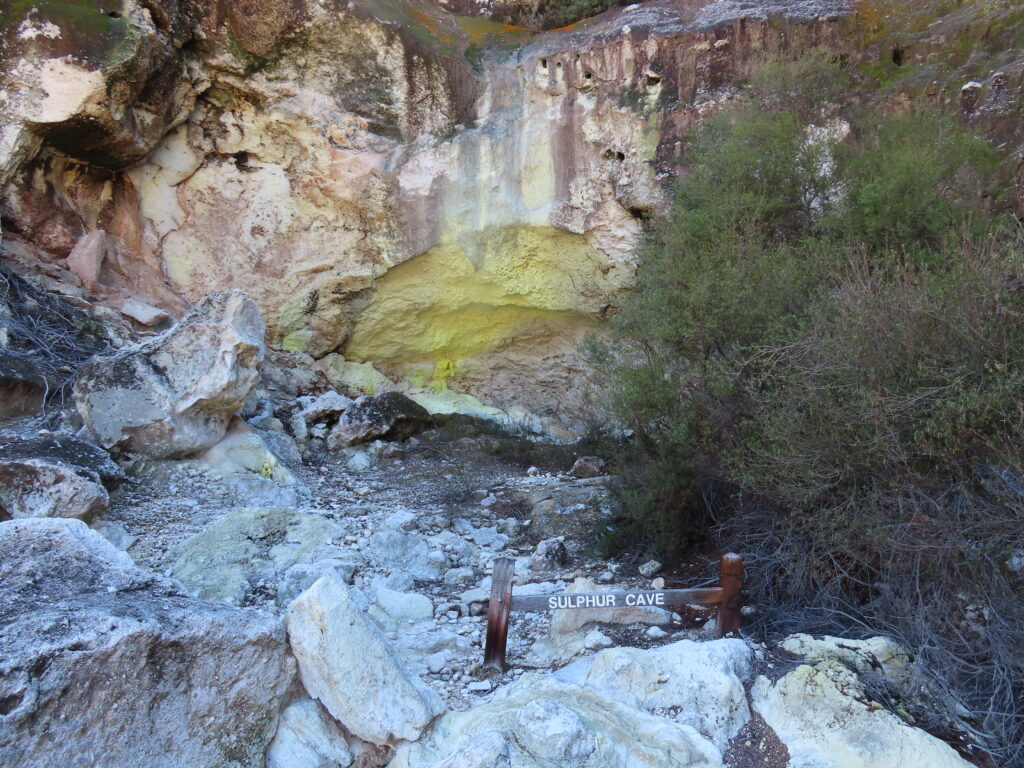
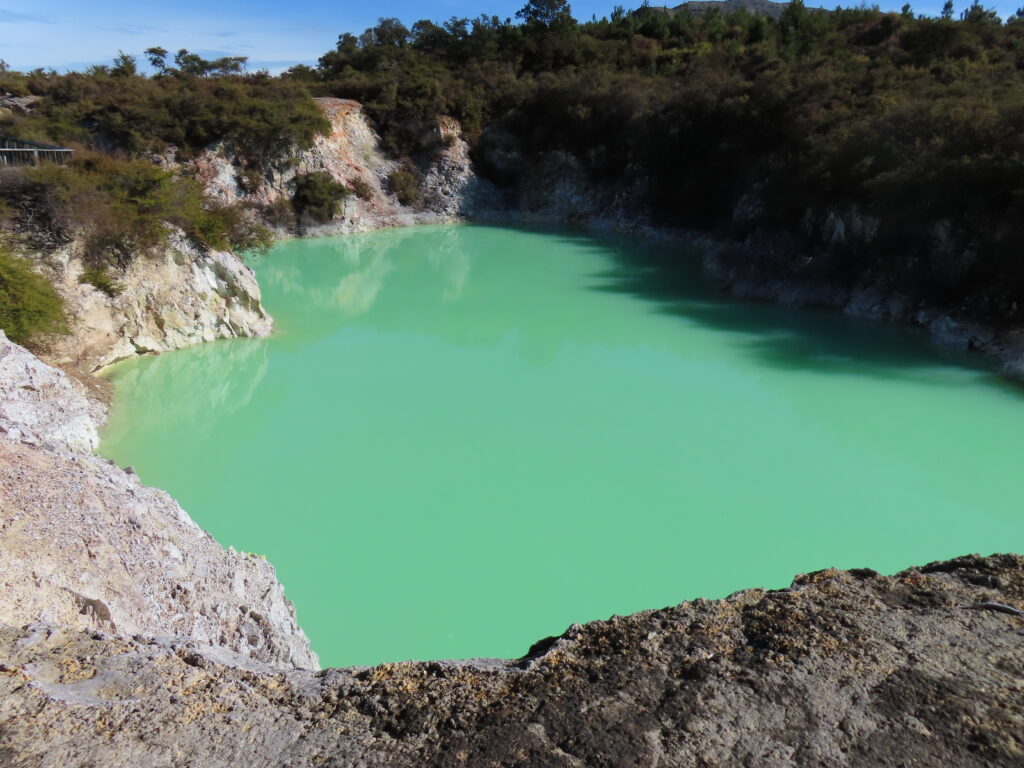
As you know, Japan also has many geothermal areas. However, the smell of sulfur in Rotorua’s geothermal areas was much milder than what I’m used to in Japan.
I enjoyed the hot spring spa in Rotorua.
Days 5–6 — August 8–9, Auckland
I enjoyed exploring Auckland for two days and left for Japan on August 10.
Afterword
Thank you, Sachi, for joining me on this trip to New Zealand. I really hope you enjoyed the challenging adventure of the Tongariro Alpine Crossing and came away feeling happy and satisfied with the experience.
Our two professional guides were both great guys, especially Kenny, who has nine children—seven of them boys. He told me that he has great respect for Japanese people because his son plays rugby for Toshiba Electric Company in Japan while living in a Japanese community.
Kenny was always paying attention to you and looking out for you. He carried your backpack when you needed help and often asked, “Are you OK?”
I really appreciated how caring and attentive he was throughout the hike.
Thank you again, and our next adventure: Switzerland.